PATIENT PRIVACY AND PROTECTION
A Rigloo shelter is a lightweight, inflatable emergency tent designed for first responders. It can be quickly placed over the patient and rescuer without moving them, which is vital in trauma cases.
It provides immediate protection from weather, helps retain body heat, and offers privacy in public areas. The Rigloo is compact, fast to deploy, and protects both patient and responder, allowing safer and more effective care. In short, it’s a portable emergency shelter that can save lives when time matters.
THE UNIQUE P.O.P.S. STRUCTURE
Due to the unique P.O.P.S. structure (Place / Over / Patient / Structure), the RIGLOO Prehospital Shelter Tent can be quickly and safely placed over the patient and the first responder without moving them.
This feature is crucial for a shelter like Rigloo because the unique P.O.P.S. structure allows it to be quickly placed over the patient and responder without moving them. This minimizes risk in critical situations and provides immediate protection from weather and public view, improving safety and care on scene.

The RIGLOO Rescuer Orange is a high-visibility emergency shelter, ideal for urban or roadside use. Its bright color ensures quick location and added safety in busy environments.
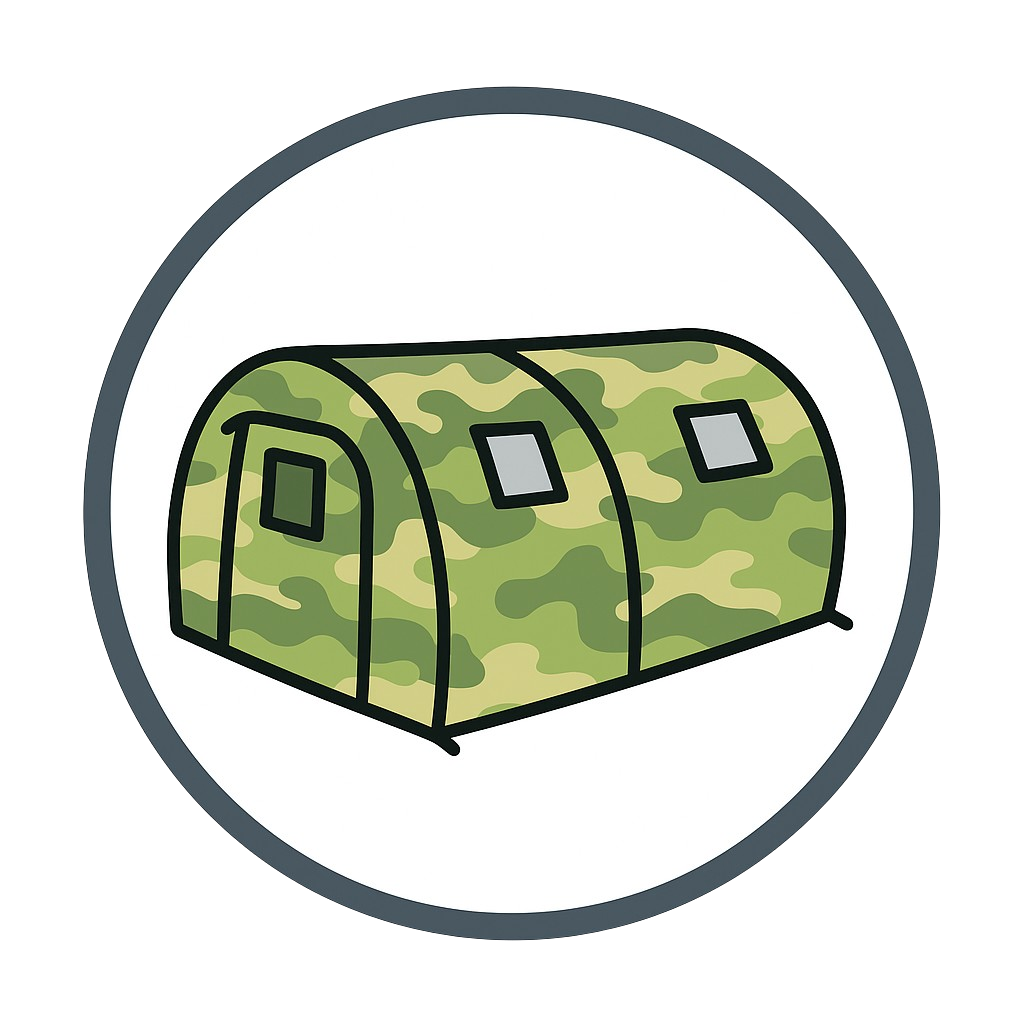
The RIGLOO Defender Woodland is designed for rural or forested areas. Its camo pattern blends into natural surroundings, making it ideal for military or wilderness operations.
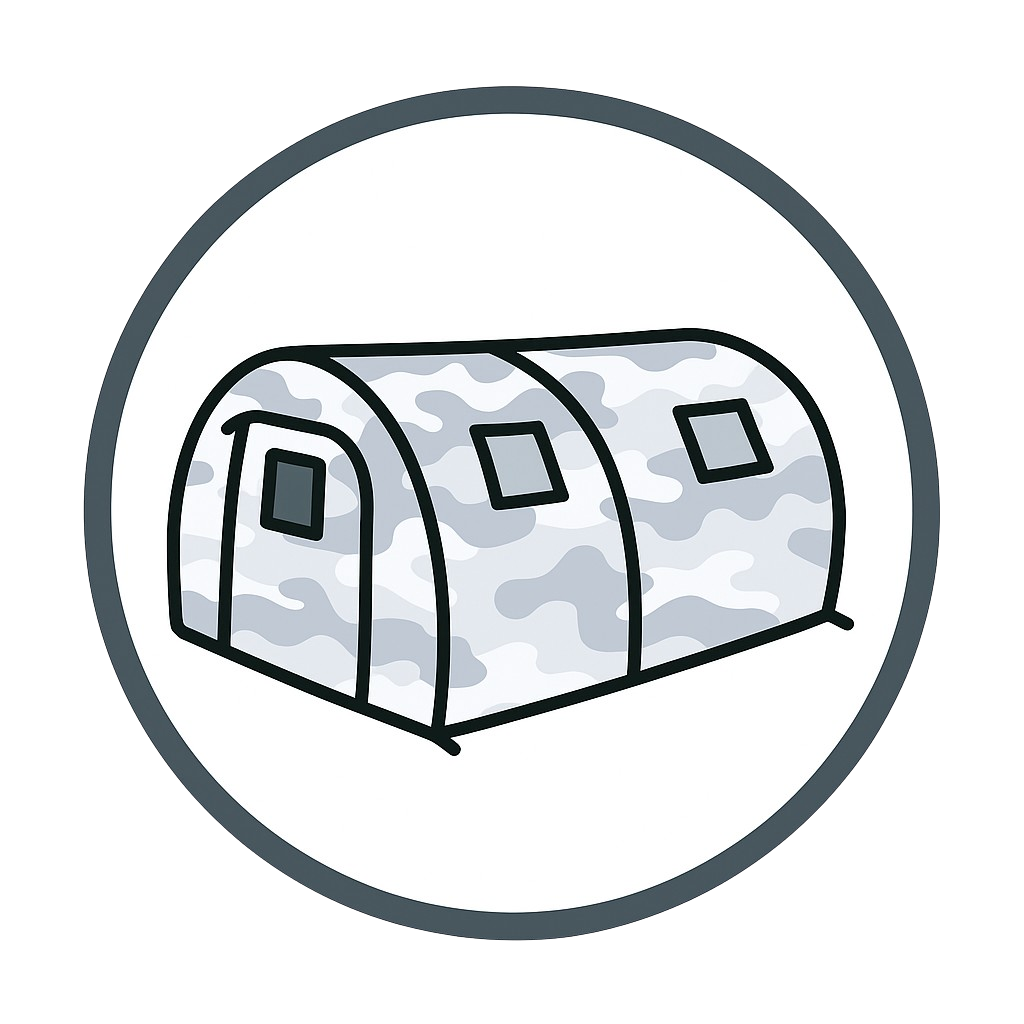
The RIGLOO Defender Tundra suits snowy or open terrain. With a low-visibility design, it offers discreet protection while delivering the same fast, reliable shelter performance.
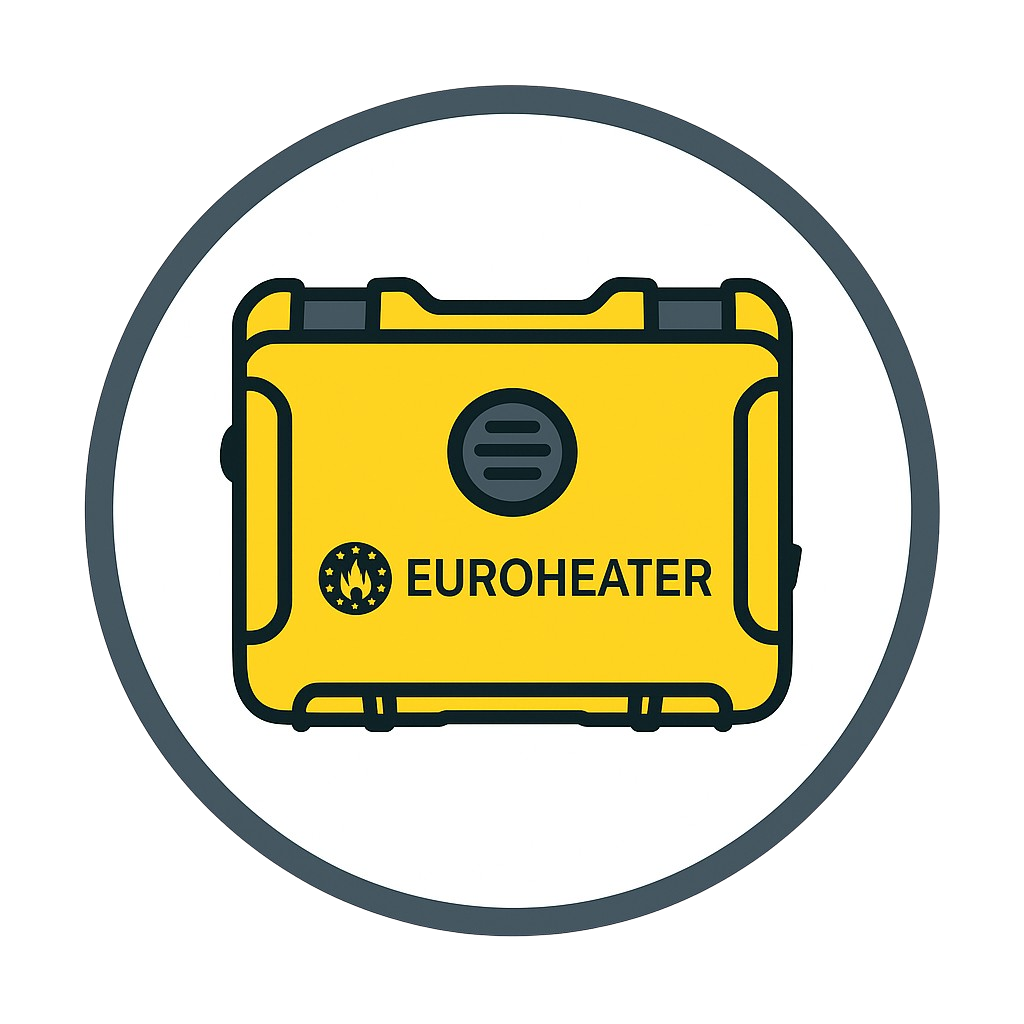
The EuroHeater is a compact, Diesel-powered heater to warm the inside of the Rigloo shelter. It helps maintain patient body temperature, supporting safe and effective prehospital care.

The CareFlare is a high-intensity, portable safety beacon used to mark the rescue site. Visible from a distance, it improves scene safety and guides additional responders to the location.

Rigloo is a Scottish invention. The design and engineering were carried out entirely in this country. The idea behind Rigloo was inspired by harsh weather conditions and the specific requirements for mobile emergency shelters.
RIGLOO SHELTERS ADVANTAGES
RIGLOO Medical Shelters protect medical staff and patients from the prying eyes of onlookers. RIGLOO Shelters also protect the patient and physician from environmental influences such as wind, rain, cold, and sun, allowing for more focused and calm treatment. Protection from such environmental influences reduces stress and anxiety and can protect against excessive cooling (hyperthermia) of the patient.
The unique P.O.P.S. structure (Place / Over / Patient / Structure) allows the RIGLOO protective tent to be quickly and safely deployed over the patient and first responder. The declared goal is to move the patient as little as possible, treat him medically, and still protect him until transport can take place.
RIGLOO Medical Shelters allow first responders and physicians a high degree of freedom of movement during the treatment phase. In the RIGLOO Medical Shelters, a stretcher as well as other medical tools can be stored without any problems and the treating physician finds enough space next to it for the initial treatment.
RIGLOO Shelters serve a range of emergency situations. This applies to both civilian and tactical operations. The focus is always on prehospital care. RIGLOO Shelters are used for: Emergency care at accident scenes, protection in emergency situations, extended field care, search and rescue operations, medical emergencies, roadside rescues, and much more.
The aim is to move the victims as little as possible. To achieve this, the medical shelter must be able to be placed over the patient and the first rescuer. Thanks to a removable bottom, the RIGLOO Medical Shelters can be placed over the patient and the first rescuer and protect them from all unwanted influences
Quick to deploy and reusable – RIGLOO Medical Shelters are quick to set up and deploy. On average, the Medical & Ambulance Shelters are ready for use in one minute. The RIGLOO Shelters have inflatable and stable air chambers which enable this quick setup.
The RIGLOO Medical & Ambulance Shelter is easy to carry, inflate and operate. The RIGLOO Shelter is appropriately lightweight and is carried in a backpack that contains everything you need in an emergency. It can therefore be used not only by emergency responders in the prehospital phase but also by inexperienced persons to create a shelter until the rescue professionals arrive.
RIGLOO Shelters are designed with the needs of emergency responders in the prehospital phase in mind. RIGLOO Medical Shelters, therefore, feature the following solutions: IV Fluid Bag Attachment – Loops and pockets for holding or hanging saline, blood bags, and accessories are always present on RIGLOO shelter tents.
RIGLOO shelter tents are designed to be carried or stored in a bag or backpack. RIGLOO shelter tents weigh 8 kg including pump. RIGLOO Shelter solutions can easily be carried on a small emergency vehicle such as a quad bike or motorcycle. The RIGLOO backpack fits in almost every trunk of a vehicle.
RIGLOO protective shelters are robust, durable, and waterproof. Range of use from -50 Celsius to +60 Celius. SPF sun protection factor 30. RIGLOO shelters are not designed to spend days. It is about protection for short periods of time until the patient is transported away. RIGLOO shelters can be used several times
RIGLOO shelters are equipped with airflow controls and mosquito nets. Deployments in different climatic zones are therefore naturally part of the repertoire of a RIGLOO solution.
RIGLOO USECASES
Provides instant weather protection and privacy for patients and responders at crash scenes.
Covers injured workers immediately, shielding them from dust, noise, and public view.
Offers a private and weather-safe area for treating athletes directly on the field.
Lightweight and portable shelter for harsh terrain, preventing hypothermia and exposure.
Acts as a quick-deploy treatment space for triage and emergency care in large-scale events.
Camouflage versions provide discreet field care under tough and unpredictable conditions.
Serves as an immediate protective station for evacuees or rescue personnel in crisis zones.
Gives medical teams a fast and private setup for crowd-related incidents or minor injuries.
Temporary shelter solution for vulnerable people during heatwaves or freezing temperatures.
Covers patients on site before airlift, eliminating the need to move them pre-transport.

Request an Offer
Get a individual and customized quote tailored to the needs of your organization.

Become a Partner
Join our global network of trusted distribution and training partners.
Rigloo protective tents for tactical and military rescue operations – protection against hypothermia
Tactical or military rescues take place under highly dynamic, often hostile or unstable conditions – in conflict zones, during special forces operations, as part of disaster relief or during foreign missions by armed forces. The focus is on speed, safety and efficiency. In these extreme situations, medical options are usually limited to pre-hospital first aid.
A key problem in these scenarios is the risk of hypothermia, even in cases of non-life-threatening injuries. Heat loss due to shock, ambient temperatures, or prolonged periods lying on cold ground can quickly become life-threatening. This is particularly critical for injured soldiers who are unable to move or have to remain outdoors until they can be transported.
There are also ethical and legal issues: even in military contexts, wounded persons have rights, and the media or digital dissemination of sensitive images from operational areas has long been a reality—with far-reaching consequences for those affected, their families, and the political perception of military operations.
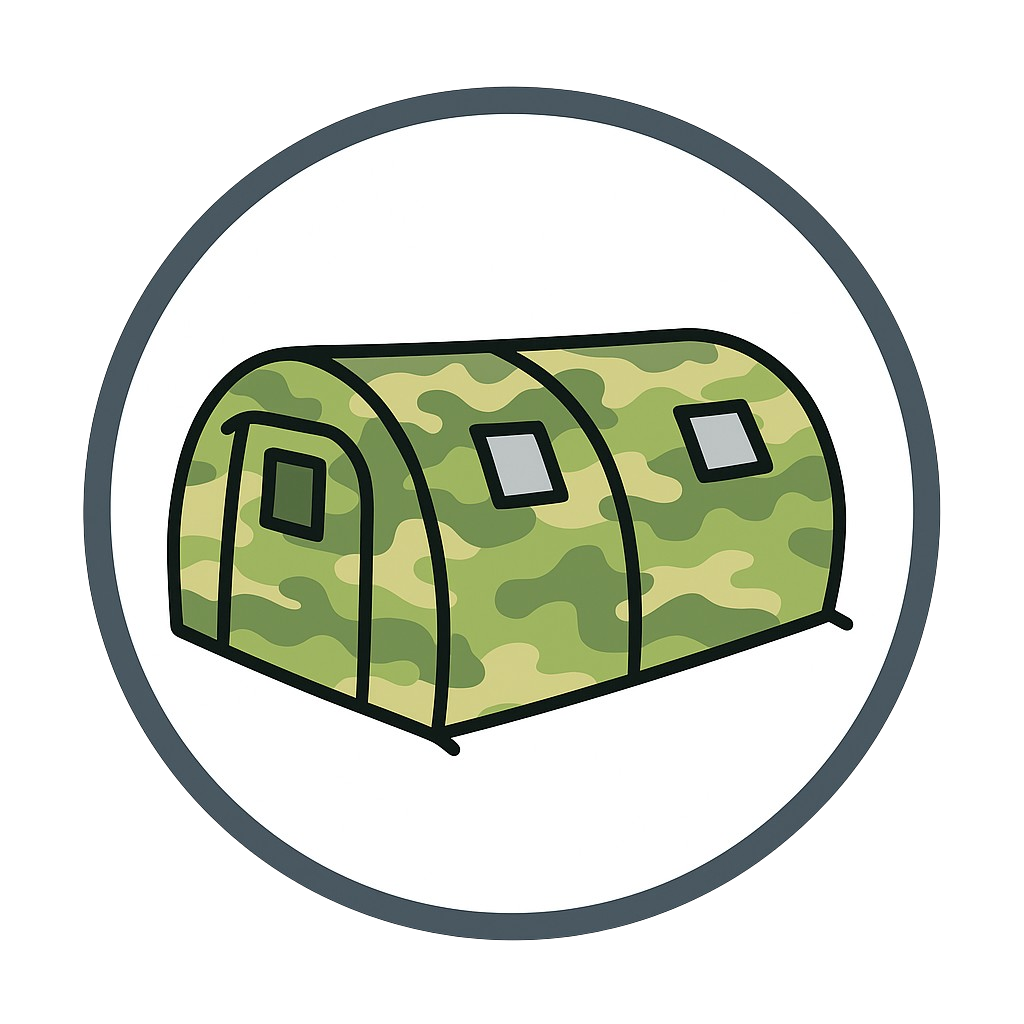
The RIGLOO Defender Woodland is designed for rural or forested areas. Its camo pattern blends into natural surroundings, making it ideal for military or wilderness operations.
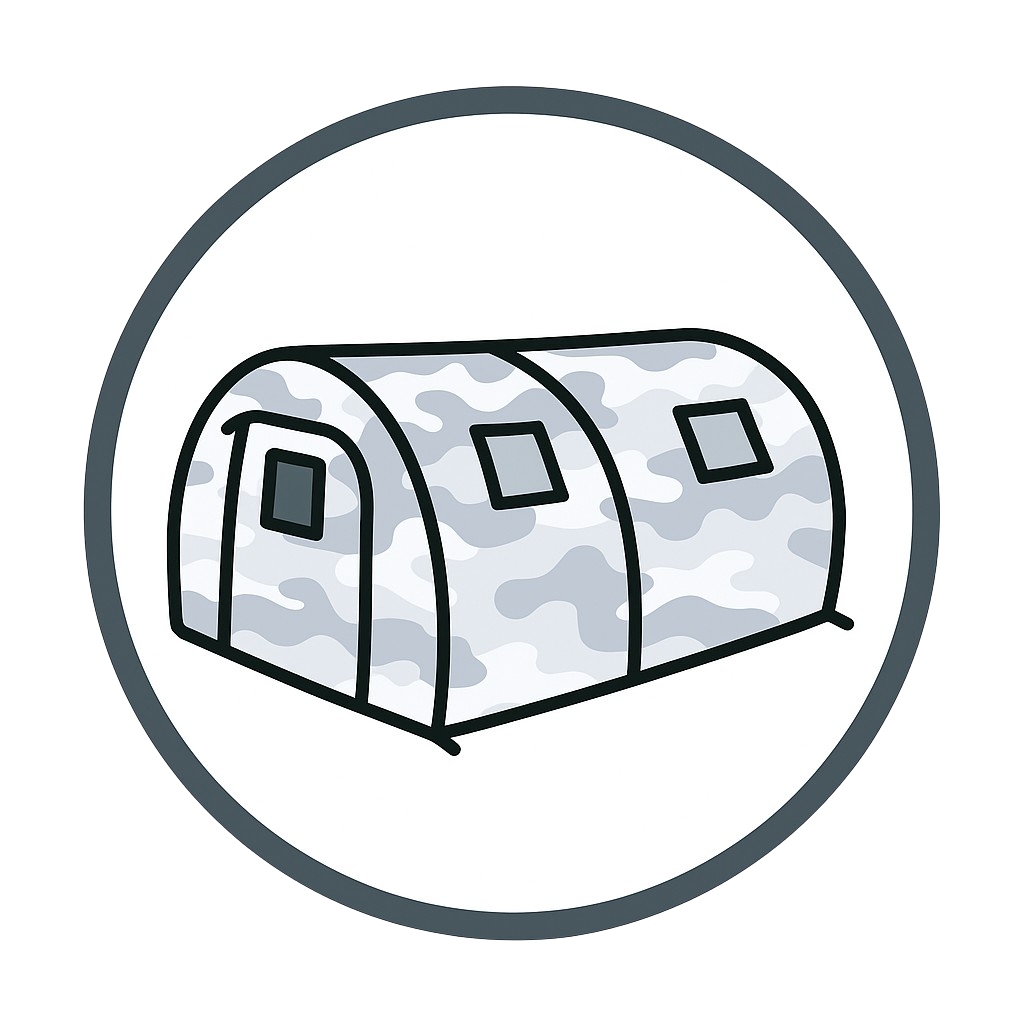
The RIGLOO Defender Tundra suits snowy or open terrain. With a low-visibility design, it offers discreet protection while delivering the same fast, reliable shelter performance.
Example situation
A multinational association is operating in a crisis area under a UN mandate. During an evacuation operation in an urban environment, a soldier is wounded by a gunshot. First aid is administered on site by the Tactical Combat Casualty Care (TCCC) team, but the wounded soldier cannot be evacuated immediately because air transport is delayed for security reasons.
The injured soldier is lying on the ground in the shadow of a damaged building, surrounded by dust, wind, and temperatures just above freezing. Within minutes, his body begins to lose heat rapidly. The administration of infusions, shock, and inactivity accelerate the cooling process. At the same time, local residents film the scene with their cell phones and post images on social media—identifiable, in uniform, wounded.
How Rigloo can help
The Rigloo Tactical Shelter can be set up by an emergency responder in seconds – without electricity or special equipment. It serves as an insulated space that fulfills the following functions simultaneously:
- Thermal protection: The heat-reflective inner coating helps minimize body heat loss. In combination with blankets or heat pads, the risk of hypothermia is significantly reduced.
- Weather protection: Wind, rain, dust, and direct sunlight are effectively shielded.
- Privacy: The wounded person is completely protected from view—whether by civilians, cameras, or enemy reconnaissance.
- Discretion for medical procedures: Invasive procedures (e.g., chest drainage, wound care) can be performed in privacy, in accordance with ethical and medical standards.
The Rigloo tent bridges the critical phase between initial care and safe transport, whether by helicopter, protected vehicle, or later evacuation.
Legal requirements
International law and human rights standards also apply in a military context, in particular:
- Geneva Conventions: The wounded must be protected under all circumstances, treated humanely, and protected from abuse.
- Military medical services: Medical personnel are bound by professional secrecy and are obliged to treat patients confidentially and with the utmost care.
- Image and data protection: In modern conflicts, images can quickly spread around the world – with consequences for the reputation of armed forces, the safety of relatives, and the political situation. The publication of identifiable images of wounded persons without consent is generally prohibited under national law.
Ethical requirements
The following also applies in the field: Wounded persons are not objects, but human beings with dignity and rights. Medical care that complies with basic ethical standards is a benchmark for the quality and legitimacy of military operations.
A tent like Rigloo not only provides protection from hypothermia, but also shows respect for the patient. The ability to create a protected space sends a signal both internally and externally: this person matters – even in the chaos of battle.
Benefits for patients and medical personnel
For patients:
- Prevention or delay of hypothermia, which can otherwise lead to organ failure or death.
- Protection from psychological stress caused by feeling exposed.
- Preservation of privacy, especially when undressing or undergoing procedures.
For medical personnel:
- Improved working conditions, even under threat.
- Compliance with medical and ethical standards even under field conditions.
- Possibility of structured care in a “closed space.”
Risks and consequences without Rigloo
If no mobile privacy and weather protection is used, several risks arise:
- Rapid cooling and hypothermia, which can be fatal even if the injury is stable.
- Media degradation of soldiers or helpers through image material—with political, social, and family consequences.
- Long-term health damage due to additional stress and exposure to cold.
- Loss of trust in military leadership and the supply chain.
- Legal and diplomatic tensions, especially in multinational operations.
Economic considerations: follow-up costs and opportunity costs
Without Rigloo, high hidden costs arise:
- Therapy and rehabilitation costs for preventable hypothermia.
- Early retirement or occupational disability due to complications.
- Psychological treatment for post-traumatic stress disorder.
- Increased cost of evacuations when transport conditions must be expedited to prevent hypothermic damage.
- Opportunity costs due to reduced operational capability of units, increased strain on medical services, and potential damage to image in media reports about unprotected wounded persons.
In comparison, the investment in a Rigloo tent is minimal—with a high impact in terms of protection, prevention of escalation, and preservation of human dignity in extreme cases.
Conclusion
Rigloo protective tents are more than just a logistical addition in the context of tactical and military rescues. They are a tool for preventing hypothermia, upholding medical ethics, and protecting the psychological integrity of the wounded. In deployment scenarios where seconds count and there are no second chances, Rigloo makes a decisive difference – for survival, dignity, and aftercare. The military reality is harsh. Humanity in care – made visible through simple but effective means – remains a sign of strength, not weakness.
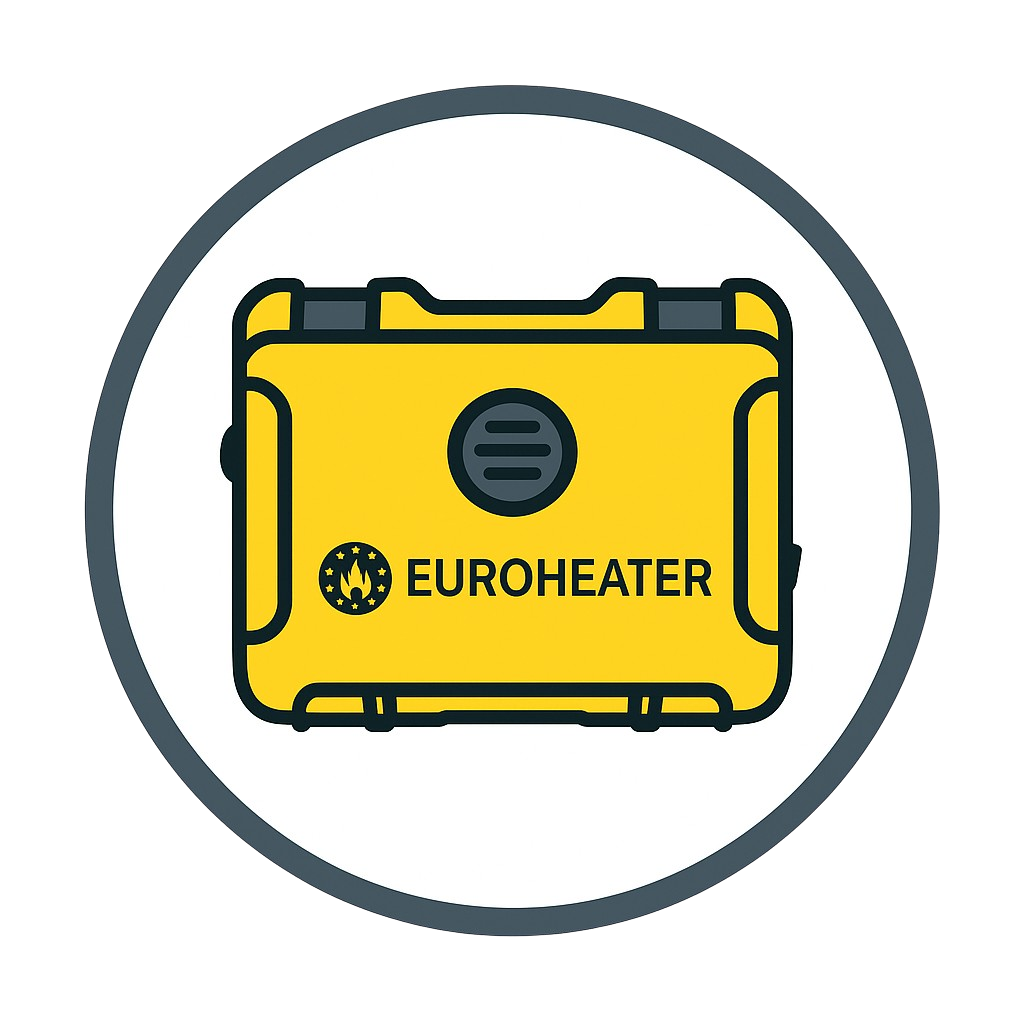
FOR ACTIVE HEAT PRODUCTION: The EuroHeater is a compact, diesel-powered heater for heating the Rigloo protective tent. It helps to actively maintain the body temperature of patients.
What is hypothermia?
Hypothermia refers to a condition in which the core body temperature drops below 35°C. It is a medically critical complication that can occur quickly, especially in injured, immobile, or unconscious individuals—even at moderate outdoor temperatures.
In tactical or military situations, hypothermia is a serious “silent enemy”: it impairs blood clotting, leads to circulatory failure, and drastically reduces the chances of survival – especially in combination with trauma and shock. This so-called “deadly triad” of hypothermia, acidosis, and coagulopathy is one of the main causes of preventable deaths on the battlefield.
A wounded person lying unprotected on cold ground or having to wait a long time for transport loses heat continuously through convection, conduction, and evaporation – even in summer. In tactical combat casualty care (TCCC), preventing hypothermia is therefore a top priority – right after controlling life-threatening bleeding.
Rigloo in the pre-hospital care phase
In military or police operations, delays in transport often occur after initial treatment. Air support may not be available, rescue vehicles may be blocked by security situations, or a safe landing zone must first be established. Rigloo plays a crucial role in this critical interim phase between initial treatment and evacuation.
The Rigloo tent serves as:
- Protection from enemy reconnaissance, civilians, media, or drones
- Thermal insulation to prevent hypothermia
- A workspace for medical personnel
- A psychological safe space for the wounded
- A protective barrier against wind, dust, weather, insects, and visual stimuli
In the pre-hospital phase – i.e., between the onset of trauma and definitive clinical treatment – a controlled, protected space is often not available. Rigloo closes this gap in care with its mobility, speed, and multifunctionality. It can be set up immediately after rescue and remains in place until safe transfer to the next stage of treatment.
Cost-effectiveness, risk, and total cost of ownership (TCO)
Armed forces, special units, and military-related organizations work with limited resources. Budgets are tight, and every purchase must be justified in relation to other investments. In this environment, the purchase of an additional visibility and protection tent such as Rigloo may seem unnecessary—if you look purely at the acquisition costs.
However, looking at it from a total cost of ownership (TCO) perspective paints a different picture. TCO includes all direct and indirect costs incurred over the entire life cycle of a piece of equipment, including follow-up costs due to damage, breakdowns, errors, or loss of reputation.
Without Rigloo, for example, the following costs arise:
- Costs for medical follow-up treatment due to hypothermia complications
- Extended downtime or permanent incapacity of soldiers
- Psychological stress or post-traumatic stress disorder
- Political pressure or media scandalization due to published images of wounded personnel
- Diplomatic or legal consequences in multinational missions
These potential follow-up costs are many times higher than the purchase cost of a Rigloo tent per rescue unit. Proactive, preventive equipment can be cheaper, more sustainable, and strategically smarter in the overall calculation.
Return on Prevention (RoP) in a tactical context
Return on Prevention (RoP) refers to the economic benefit of a preventive measure in relation to its cost. This term is particularly meaningful in a military context, where human lives, operational readiness, and political stability are at stake.
A simple example:
- Cost of a Rigloo tent: approx. 1,200 euros.
- Prevention of hypothermia-related late trauma requiring hospitalization, rehabilitation, therapy, and possible early retirement: > $50,000.
- Prevention of media exposure of a wounded soldier (with PR damage, debriefing, psychological consequences): impossible to quantify, but certainly serious.
- → A single incident avoided can more than justify the investment in dozens of Rigloo tents.
In a tactical context, a good RoP not only means cost savings, but also:
- Maintaining operational readiness,
- Strengthening morale (internal legitimacy),
- Increasing trust in leadership and duty of care,
- Establishing legal certainty vis-à-vis the public and partners.
A high return on prevention is therefore an indicator of strategic foresight in military scenarios – not of excessive caution.
- Vogt-CTE GmbH
- Erlenauweg 17
- CH 3110 Münsingen
- +41 33 223 72 12
- info@vogt-cte.com
- VAT CH - CHE-251.716.630 MWST
- UID CH - CHE-251.716.630
- CH ID - CH-036-4065213-9
- EORI - DE684075747272454
- ZAZ - 17790-0 Vogt-CTE GmbH
WE SUPPLY RESCUE INNOVATIONS
At Vogt-CTE, we offer our European trading partners access to unique innovations in the field of rescue. Our solutions make rescue operations easier, faster, safer, and less resource-intensive. The products we represent are highly specialized, proven in the field, and make a real difference — saving lives every day. We don’t just bring products to market — we deliver progress. Together with our partners, we ensure that these innovations reach the people who need them most: those on the front lines of rescue operations.